The knitwear capital of India.
Tiruppur is the beating heart of India's knitted-garment industry — an integrated manufacturing ecosystem that turns yarn into finished apparel for the world.
Note: figures aggregate different measures and reporting periods drawn from industry associations, government trade bodies and cluster reports.
An integrated manufacturing ecosystem
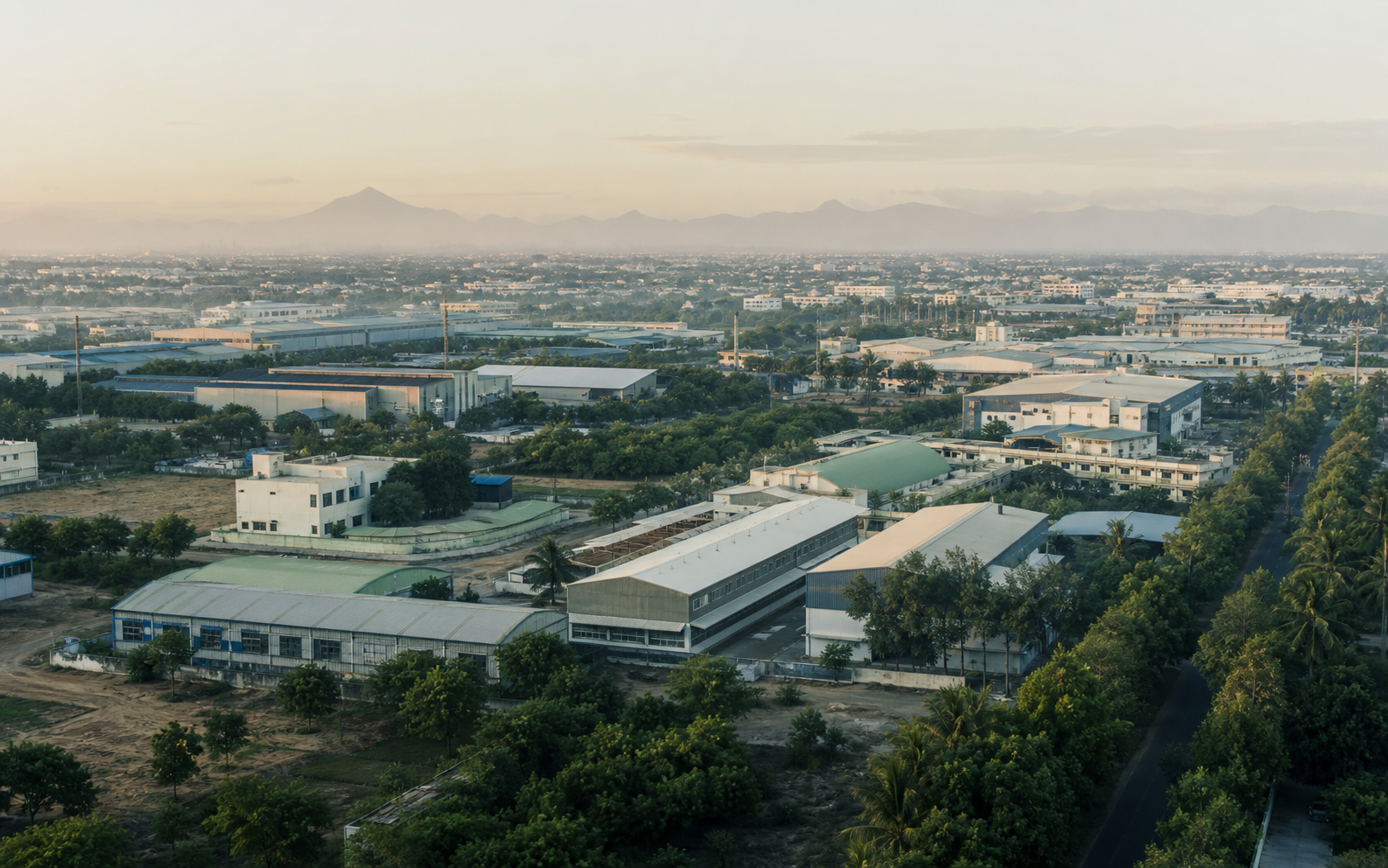
Tiruppur combines spinning mills, circular and flat knitting units, dye houses with zero-liquid-discharge treatment, printing and embroidery workshops, cut-and-sew factories, finishing units, trims and packaging suppliers — often within a few kilometres of one another. That density collapses lead times and enables tight iteration on samples.
Specialist suppliers, deep bench
Beyond garments, Tiruppur hosts specialists in labels and hangtags, packaging, custom trims, testing laboratories and logistics — allowing full-package programmes without cross-cluster dependencies.
Sustainability & circularity
The cluster's ZLD dyeing infrastructure recycles approximately 13 crore litres of water daily. Fibre recycling, GOTS-certified organic supply chains and increasingly renewable energy sourcing are shaping the next generation of Tiruppur manufacturing.
Man-made fibres & sportswear
Historically cotton-dominated, Tiruppur is now scaling programmes in polyester, recycled polyester, nylon blends and technical knits — powering sportswear, athleisure and performance apparel exports.
Outlook to 2030
With an industry ambition of ₹1 lakh crore in exports by 2030, Tiruppur is investing in automation, worker welfare, chemical management and digital traceability — infrastructure European brands increasingly require.